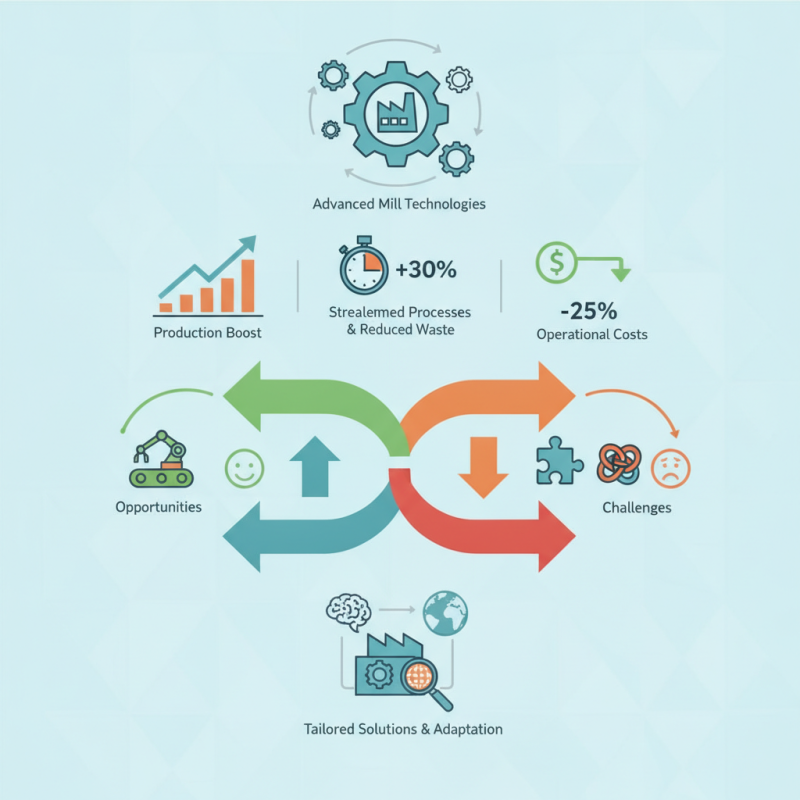
In today’s tough world of manufacturing, mill works really play a big part in helping companies work more efficiently. According to a report from McKinsey & Company, businesses that jump into using the latest mill tech can actually boost their production by up to 30%. That’s a pretty impressive jump, and it just shows how important mill works are in modern manufacturing these days.
They help simplify processes and cut down on waste too. When companies like Siemens bring in automated systems, they’ve seen their operating costs drop by around 25%. But, let’s be honest, shifting to new tech isn’t always a walk in the park. Many firms find it tricky to fully embrace these innovations, and if they don’t, they risk falling behind in both efficiency and output.
Diving into mill works definitely opens up some great opportunities — but it also comes with its own set of challenges. While the upside of higher productivity is pretty tempting, companies need to handle the tricky bits of getting everything set up at first. Experts say that it’s super important to find solutions that fit your specific manufacturing setup. Taking the time to understand and adapt to these unique needs is key if you want to really make the most of what mill works can offer.
The Role of Mill Works in Modern Manufacturing Processes
In contemporary manufacturing, mill works play a pivotal role in boosting efficiency. These facilities transform raw materials into usable products. Traditionally, mills relied heavily on manual labor. However, recent advancements have ushered in automation, enhancing precision and productivity. A report from the Association for Manufacturing Technology reveals that automated mills can increase output by up to 30%. This shift challenges companies to adapt quickly.
Mill works today integrate sophisticated machinery. Equipment like CNC machines enable high-speed production with minimal human intervention. This precision reduces waste and improves quality. Yet, reliance on technology also introduces new concerns. Workforce training must evolve to keep pace with machinery upgrades. A survey by the National Association of Manufacturers showed that 60%of companies struggle to find skilLED workers who can operate advanced equipment effectively.
Data indicates that mills that invest in technology and training see a marked decrease in downtime. They report a nearly 25% increase in overall efficiency. However, not all mills are reaping these benefits. Some remain slow to adopt new technologies. This hesitation can hinder competitiveness in a fast-paced market. Commitment to continual improvement in training and technology is essential for future success.
Types of Mill Works and Their Applications in Industry
Mill works play a crucial role in enhancing manufacturing efficiency across various industries. There are several types of mill works, each designed for specific applications. For instance, ball mills are widely used for grinding materials in industries like mining and construction. According to a 2022 report by Global Industry Analysts, the global ball mill market is expected to reach $4.0 billion by 2027, reflecting their importance in material processing.
In addition to ball mills, there are other notable types, such as roller mills and hammer mills. Roller mills are ideal for producing fine powders, especially in the food and feed sectors. Their energy efficiency and low operational costs make them attractive for manufacturers. Meanwhile, hammer mills excel at size reduction, particularly in the recycling industry, helping to convert waste into reusable materials. A study by the American Society of Mechanical Engineers indicated that the proper use of mill works can improve overall system efficiency by up to 30%.
While the benefits of mill works are significant, there are challenges. Many facilities struggle with maintenance and downtime issues. In some cases, inefficiencies in the milling process can lead to increased operational costs. Companies must continuously evaluate their milling technologies to avoid obsolescence. This self-reflection ensures they maintain optimal performance levels and adapt to the evolving demands of the industry.
How Do Mill Works Enhance Manufacturing Efficiency? - Types of Mill Works and Their Applications in Industry
| Type of Mill | Description | Applications | Efficiency Benefits |
| Ball Mill | A cylindrical device used to grind materials into fine powder. | Cement, Mining, Chemical Industry | High production capacity, uniform particle size. |
| Hammer Mill | Uses rapidly moving hammers to crush materials. | Animal Feed, Wood Processing, Recycling | Versatile, efficient size reduction, low energy consumption. |
| Roller Mill | Uses cylindrical rollers to crush and grind materials. | Grain Milling, Sugar Production, Plastic Industry | Improved efficiency, reduced energy costs, better product quality. |
| Planetary Mill | Contains planetary motion for high-energy milling. | Nano-materials, High-energy milling applications | Achieves fine and ultra-fine particles efficiently. |
| Attritor Mill | A stirred ball mill that operates continuously or batchwise. | Ceramics, Paints, Pharmaceuticals | Shorter milling time, more control over product size. |
Enhancing Productivity Through Advanced Milling Techniques
Advanced milling techniques have revolutionized manufacturing efficiency in recent years. Data from the National Institute of Standards and Technology reveals that mills equipped with updated technology can boost productivity by as much as 20-30%. These improvements are not just numbers; they translate into shorter lead times and reduced waste on the shop floor.
One key aspect of enhancing productivity is precision. High-quality milling machines reduce material wastage. According to a recent study from the Manufacturing Productivity Institute, precise milling can save companies up to 15% in raw materials costs. That's significant! However, the investment in such machinery can be a barrier for smaller firms. Balancing cost with efficiency requires careful planning and analysis.
Moreover, there’s the need for skilled operators. Advanced mills demand a workforce armed with the latest skills. Training programs have seen a rise; yet, a skills gap remains. Inadequate training can lead to high operational costs. It's vital for companies to invest in talent development. As they innovate, they must also cultivate a knowledgeable workforce for sustainable growth.
Integration of Automation in Mill Work Operations
The integration of automation in mill work operations is reshaping manufacturing efficiency. Recent studies indicate that automation can boost productivity by 20-25%, minimizing human error and optimizing processes. With the use of automated machinery, tasks such as cutting, milling, and assembly can occur with precision and speed. This allows mills to increase output while maintaining quality.
However, the transition to automated systems is not without challenges. Many facilities face high initial costs and a steep learning curve. Maintaining the machinery requires skilled personnel, which can be a hurdle for some companies. A report by the International Federation of Robotics shows that almost 70% of manufacturers acknowledge needing more training to handle new technologies effectively.
The potential for improved efficiency is clear, yet the unpredictability of technology can create hesitance. Software glitches or hardware failures can disrupt production timelines. Automating traditional processes forces mills to rethink workflows and workforce deployment. Balancing technology and human ingenuity will determine future success in mill operations. Such reflections are critical for companies aiming to harness automation's power while mitigating its risks.
Cost-Benefit Analysis of Implementing Mill Works
Implementing mill works can significantly boost manufacturing efficiency. However, a careful cost-benefit analysis is essential before making this investment. Companies need to assess both initial costs and potential savings. An accurate analysis not only includes machinery costs but also maintenance and operational expenses.
Tip: Always factor in employee training costs. New equipment often requires specialized knowledge. Overspending on equipment without adequate training can lead to inefficiencies.
Incorporating mill works may lead to long-term savings through increased production rates. But these improvements are not guaranteed. Older machines can break down, leading to unexpected costs. This risk must be weighed against potential gains.
Tip: Regular maintenance is crucial. Schedule frequent check-ups to prevent major breakdowns. Consider a maintenance plan to stay ahead in operational efficiency.
Analyzing the return on investment will provide clarity. Understand all variables, from reduced labor costs to faster production timelines. This analysis should be thorough yet flexible enough for future adjustments.
Future Trends in Mill Technology and Manufacturing Efficiency
The future of mill technology is rapidly evolving. Innovations are transforming how manufacturers enhance efficiency. Automation and digital integration lead the way. These advancements reduce downtime and increase production rates. Smart mills using AI analyze data for better performance. Manufacturers can spot issues before they escalate.
Embracing flexible manufacturing systems is vital. These systems adapt to changing market demands. This approach fosters creativity and personalization in products. As a result, companies can respond quickly to consumer needs.
Tips: Implement regular training sessions for staff. Skilled operators can maximize new technologies. Encourage open communication about technological challenges. Continuous feedback can lead to better solutions. Lastly, remember that not every innovation is right for your business. Evaluate options carefully to find the best fit.
Conclusion
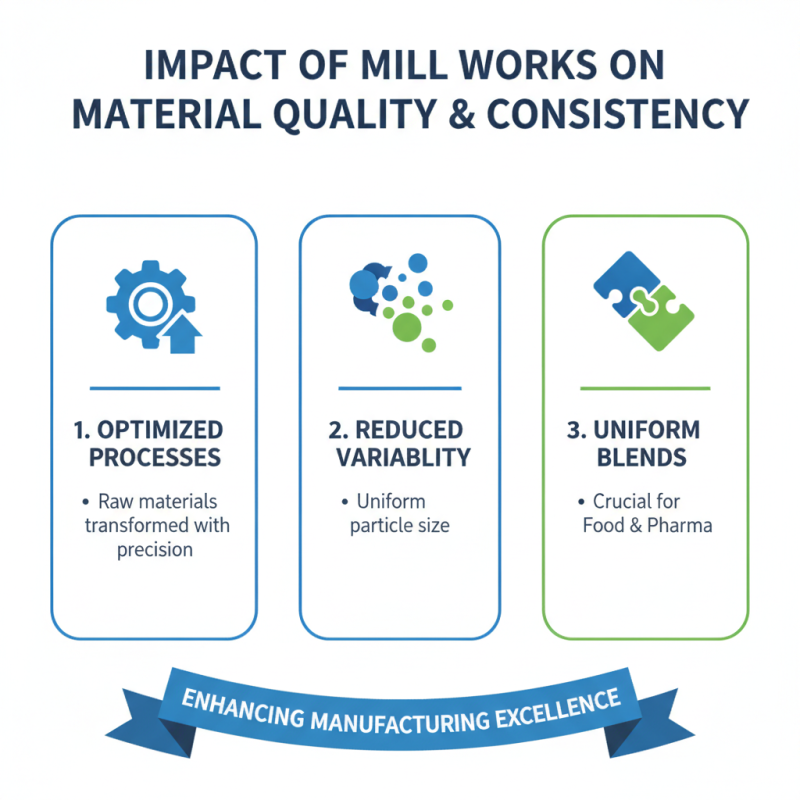
Mill works play a crucial role in enhancing efficiency within modern manufacturing processes. By employing various types of mill works, industries can achieve improved productivity through advanced milling techniques that ensure high-quality and consistent materials. The integration of automation in mill work operations further streamlines production, reduces labor costs, and minimizes errors, leading to a significant boost in manufacturing efficiency.
Moreover, a thorough cost-benefit analysis highlights the financial advantages of implementing mill works, showcasing their value in optimizing resource utilization. As technology continues to evolve, future trends in mill works promise further enhancements, ensuring that manufacturers remain competitive in a rapidly changing market. Overall, the strategic incorporation of mill works is essential for driving progress and innovation in the manufacturing sector.